
Cannondale Projects
Synapse
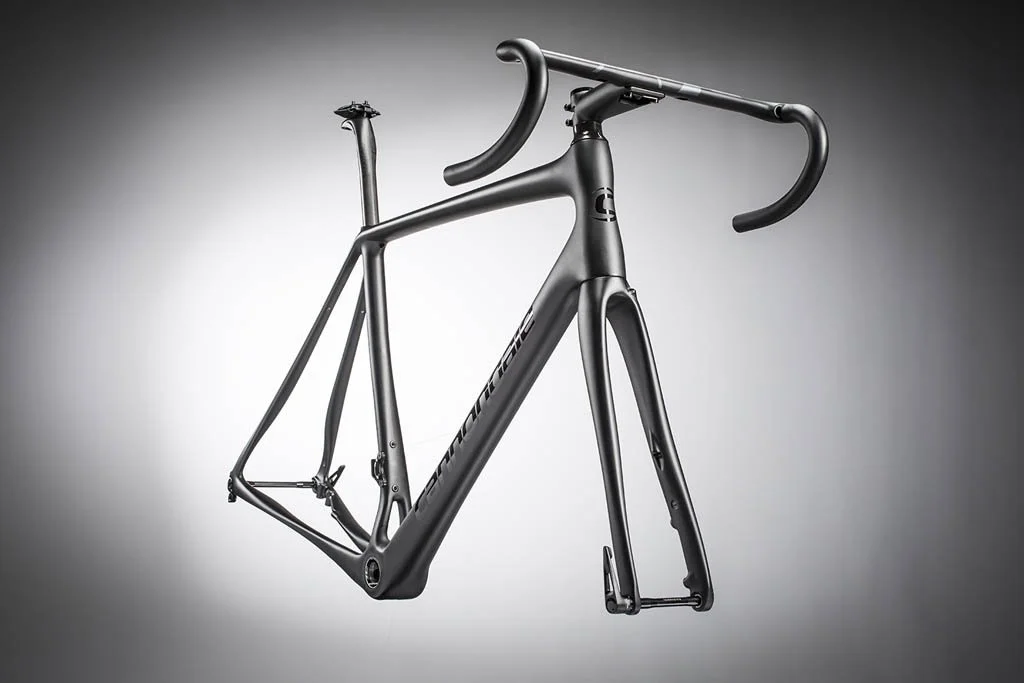
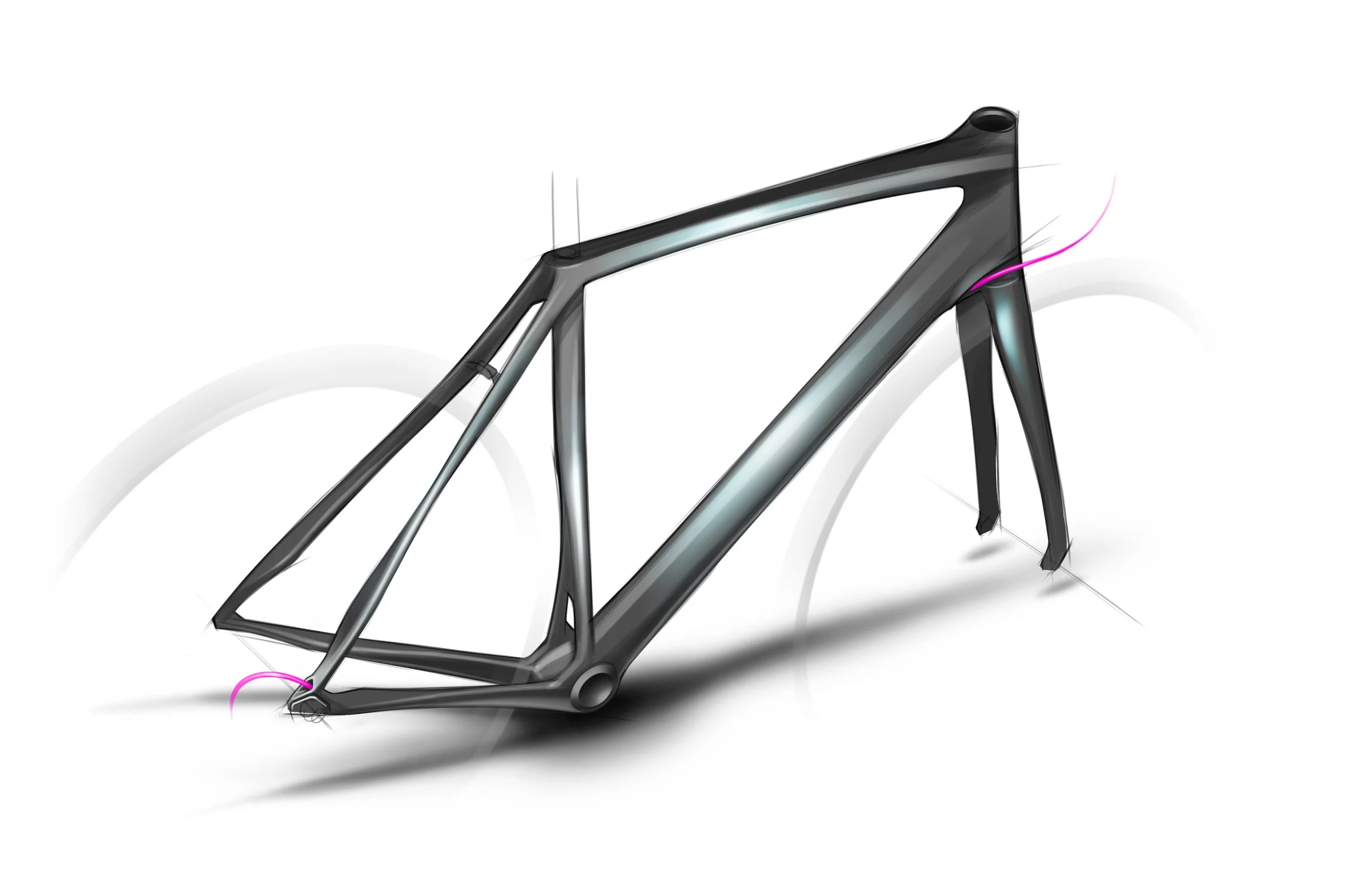
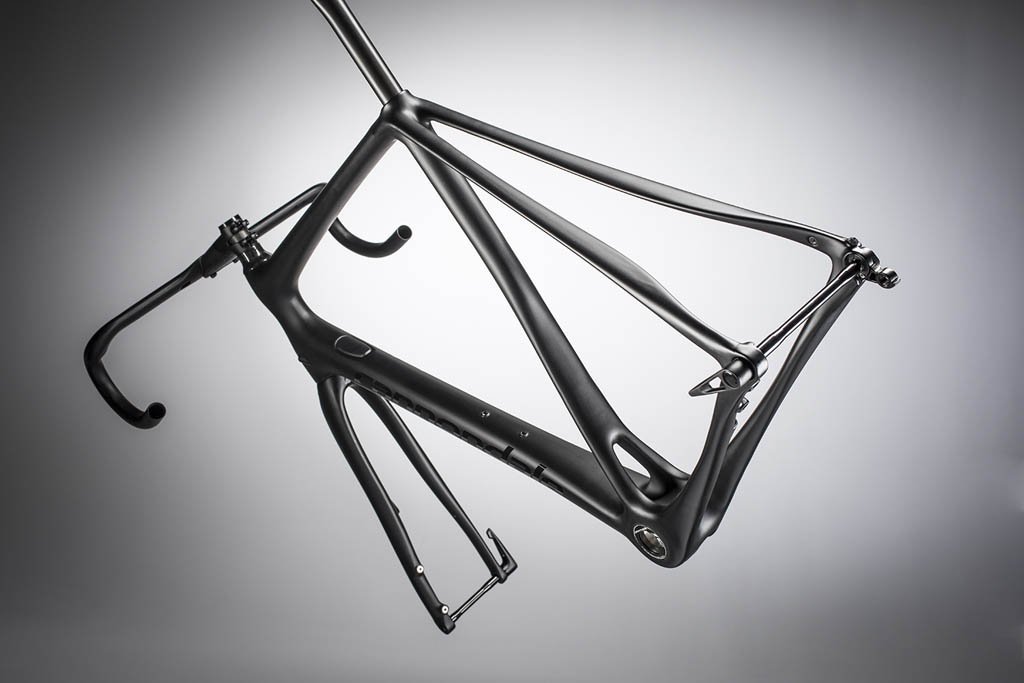
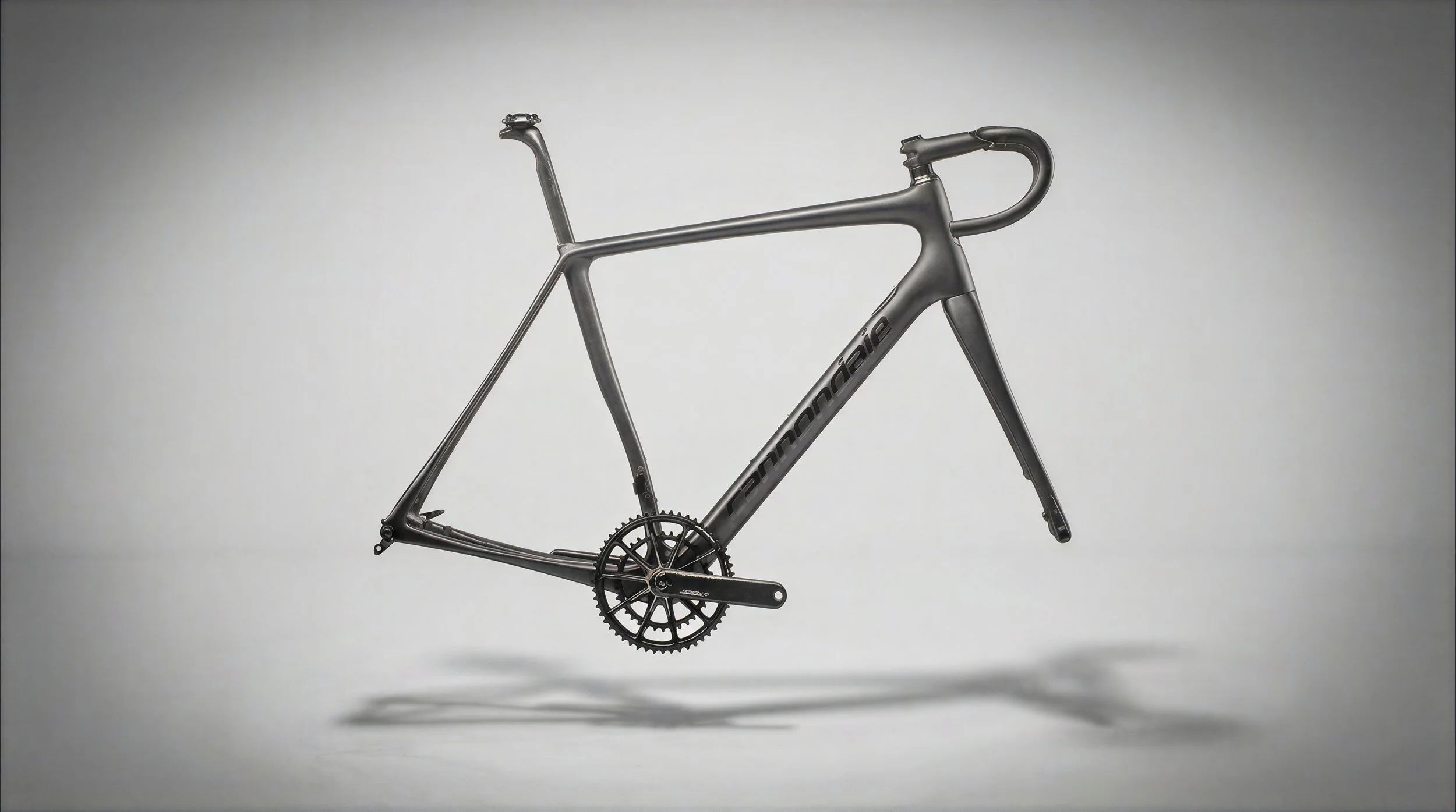
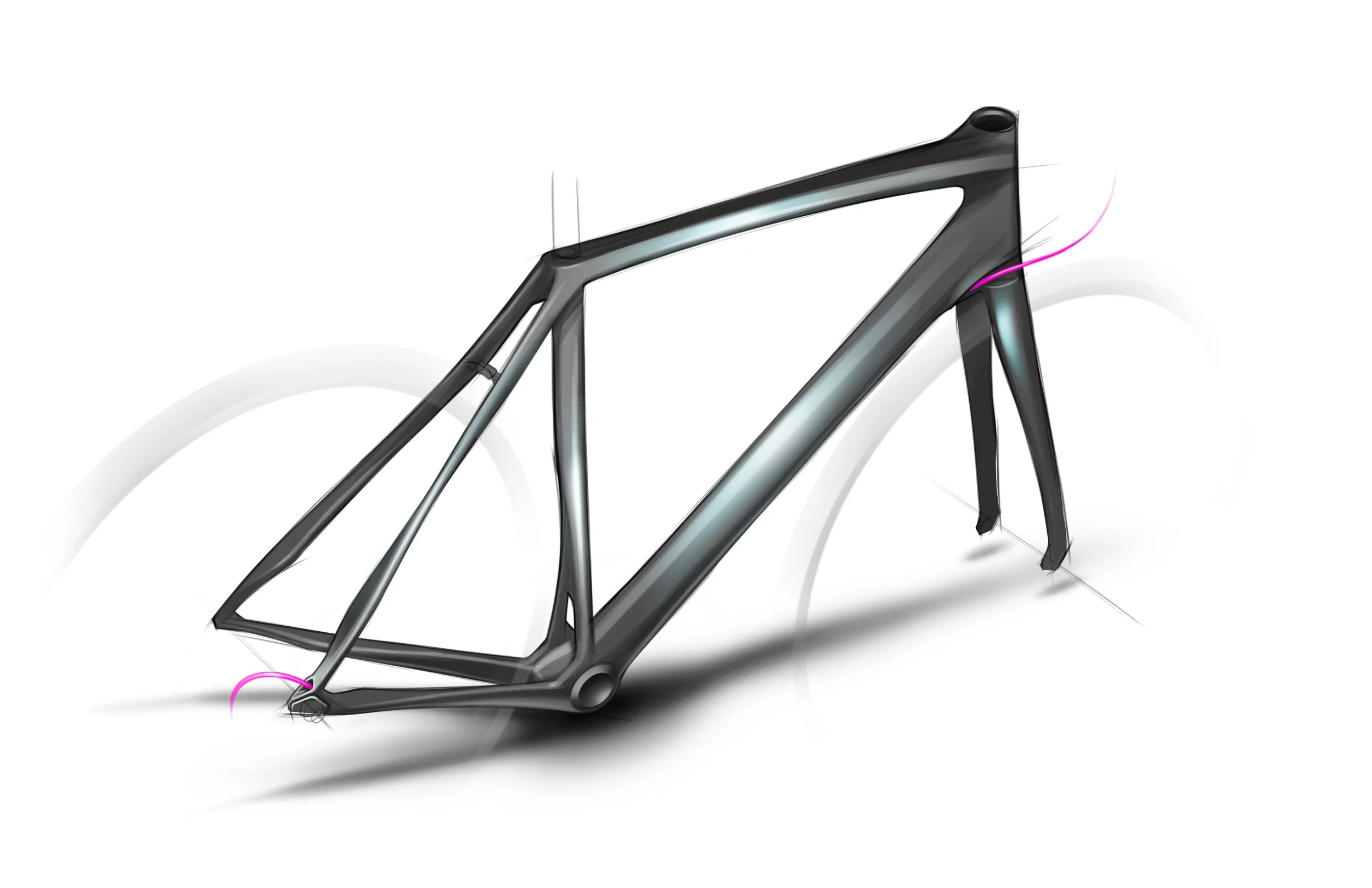
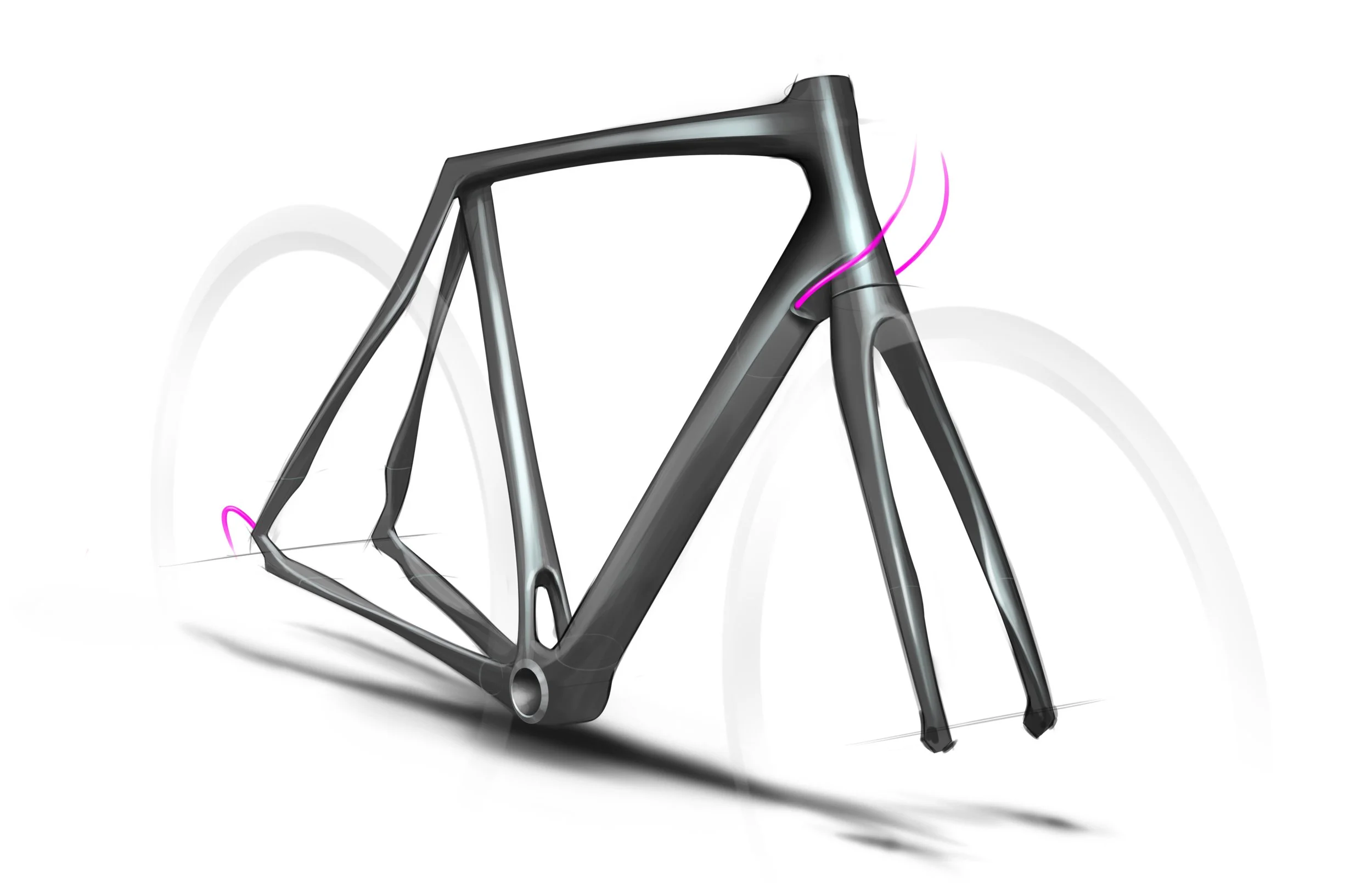
I had the privilege of leading the design of the second-generation Cannondale Synapse as it became an established part of Cannondale’s road-bike lineup.
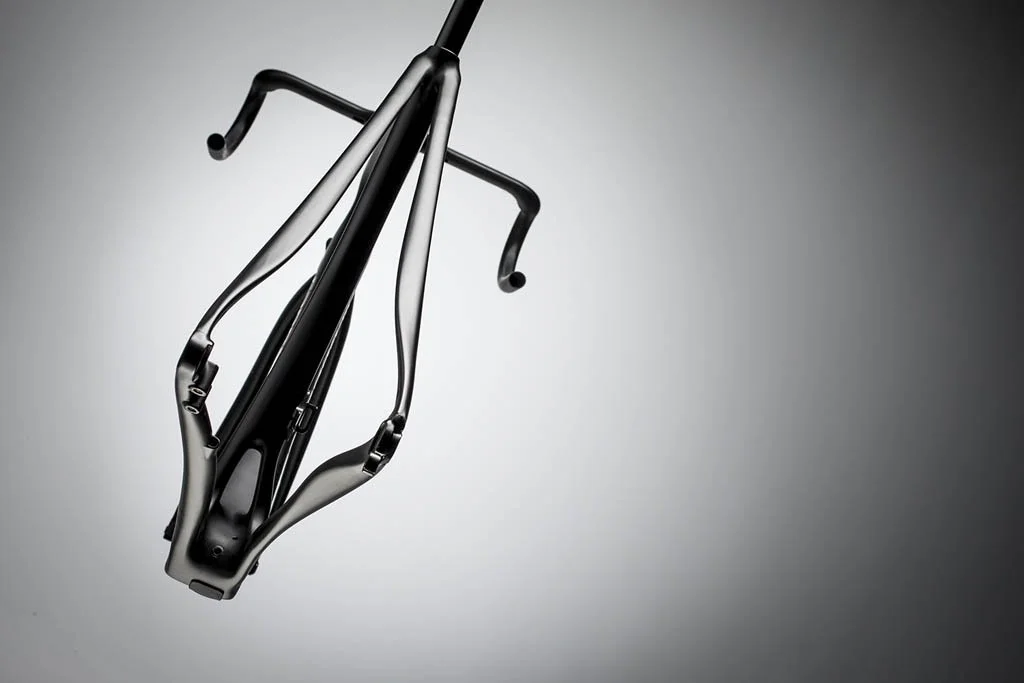
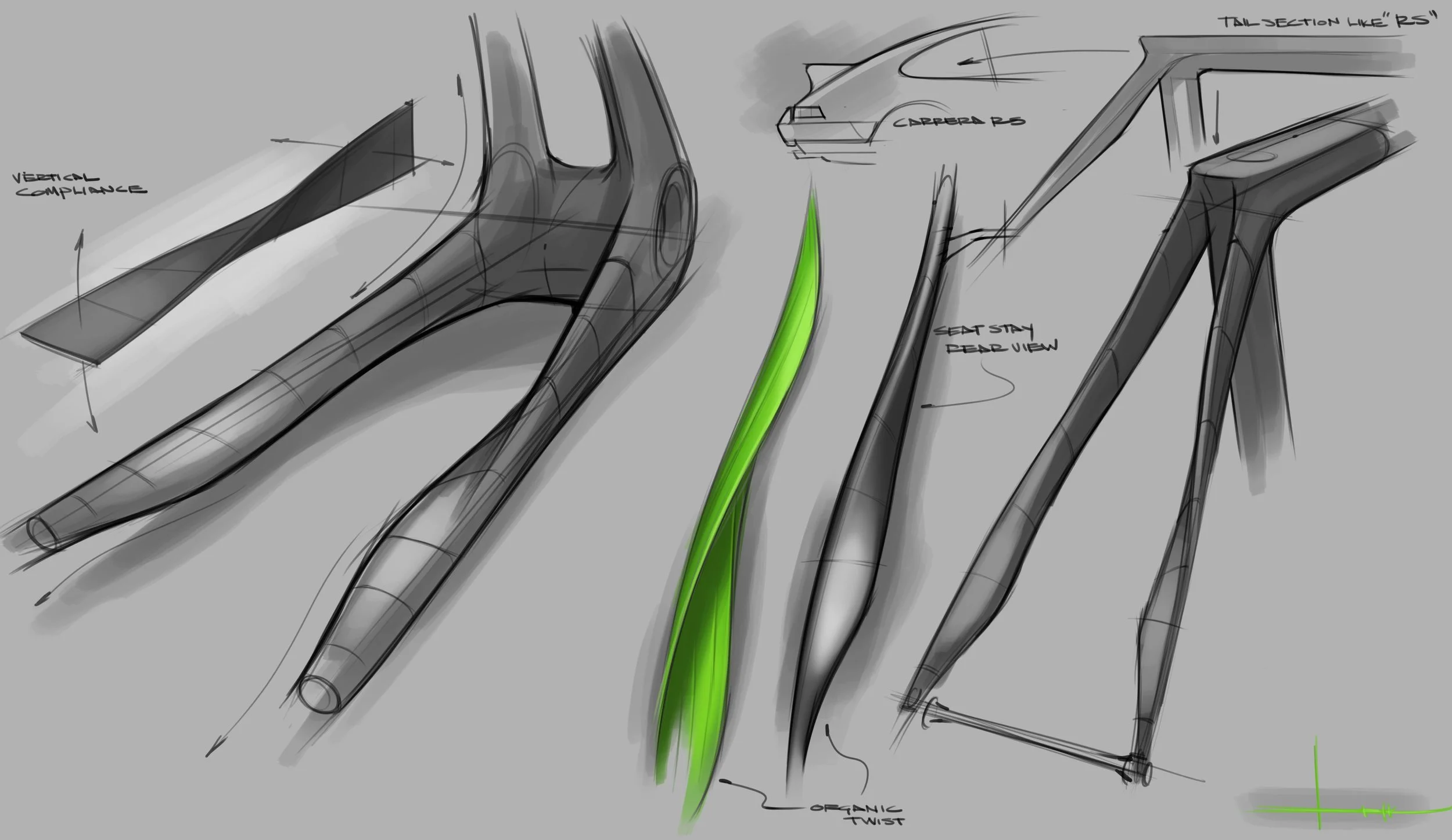
The frame’s organic forms were inspired by shapes found in nature and the tapered musculature of a cyclist’s legs. This influence is visible in the twisting profiles of the seatstays and chainstays. Deeper sections provide lateral stiffness, while flatter sections allow targeted vertical deflection, improving comfort and control over rough roads.
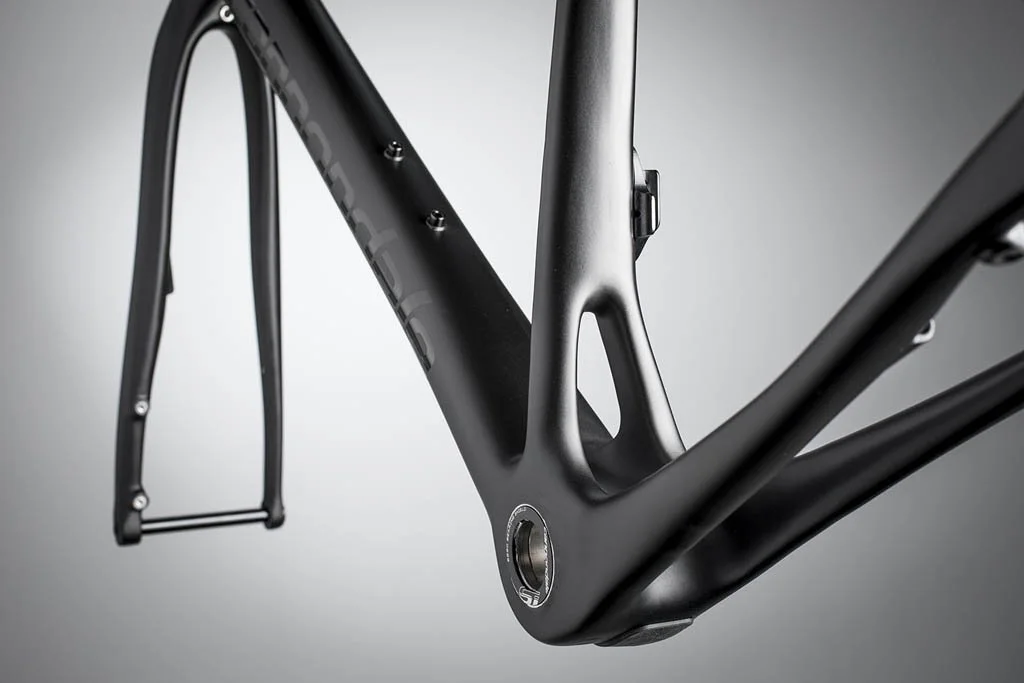
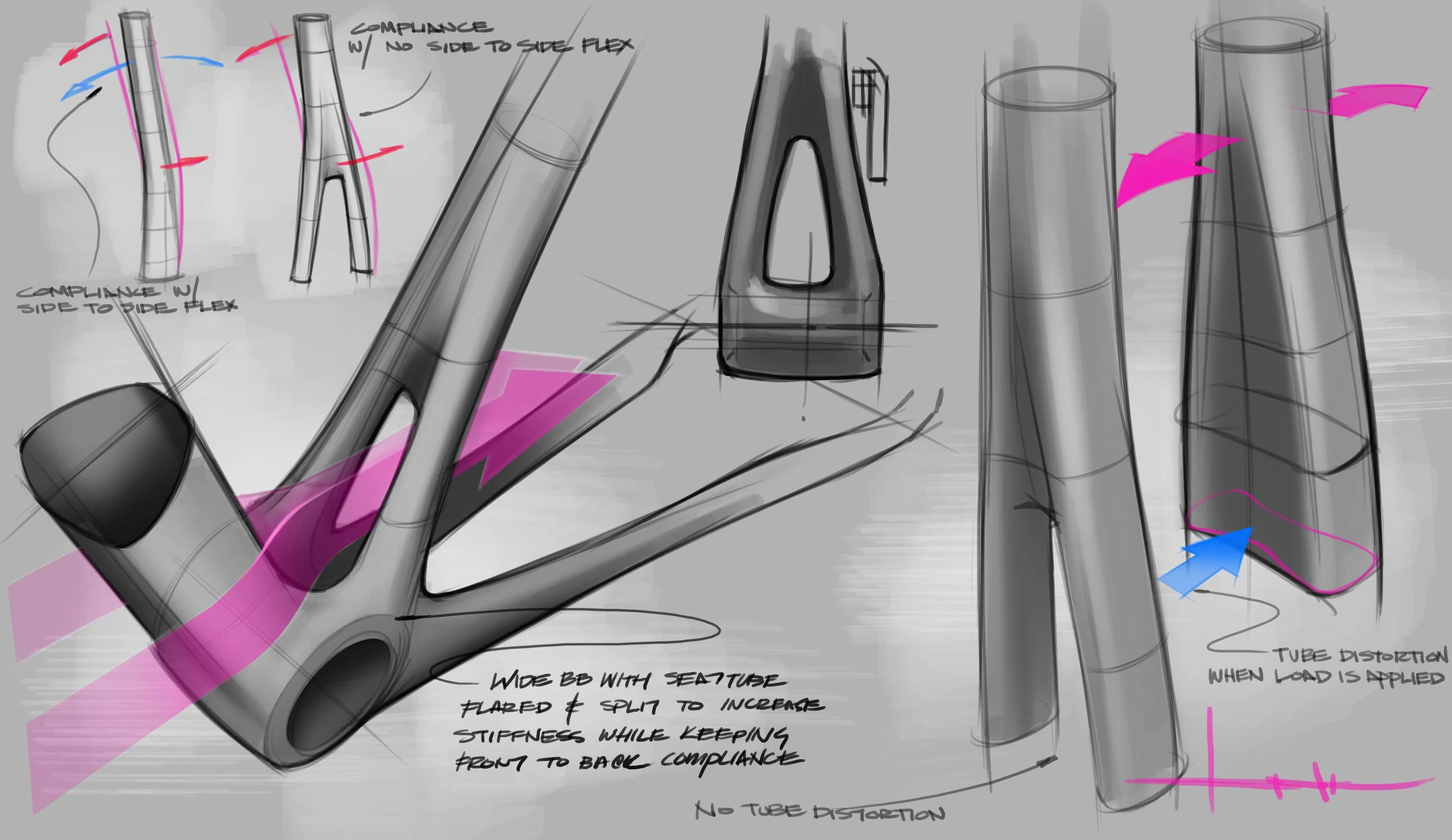
Another challenge was creating the widest possible connection between the seat tube and bottom bracket without causing the broad, flattened tube section to buckle. The solution was a distinctive opening at the base of the seat tube, dividing it into two smaller sections that blend into the bottom bracket and distribute loads more effectively. This patented feature created a stronger structural connection while giving the Synapse a unique and recognizable design detail.
Jekyll
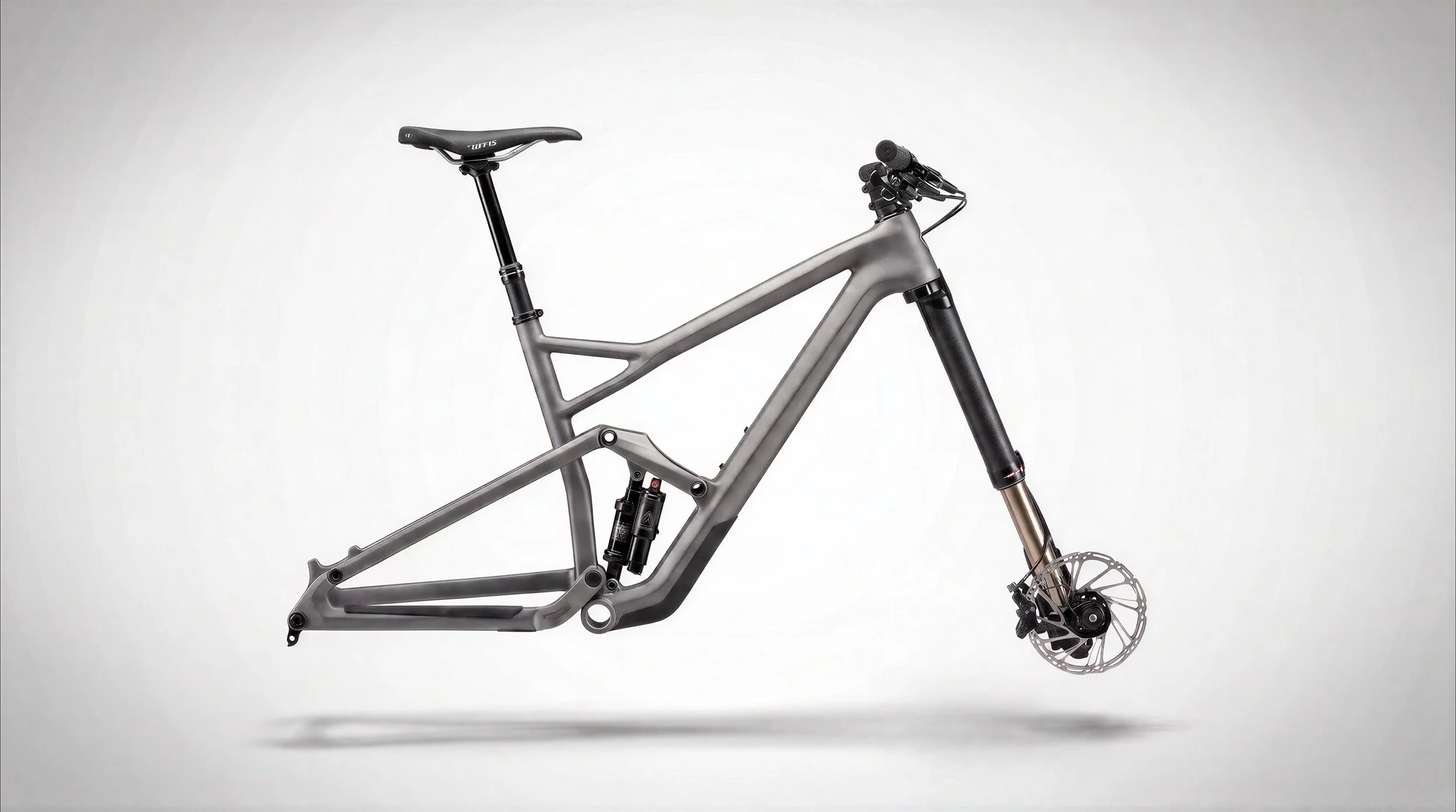
One of the most rewarding projects I worked on was the revival of the Cannondale Jekyll for its second generation. Developed in collaboration with Denk Engineering in Freiburg, Germany, the project challenged established approaches to full-suspension mountain-bike design.
Carbon fiber was becoming increasingly accepted in mountain biking, creating new opportunities for greater integration and a more cohesive design from front to back. At the time, many carbon frames still relied on separate machined or cast-aluminum suspension links, resulting in a visual and material disconnect.
For the Jekyll, we developed a bladder-molded carbon-fiber link that integrated seamlessly with the frame’s form language. Combined with a pull-shock system—in place of a conventional push-shock layout—this created a compact and visually unified suspension package.
The Jekyll established a new design direction for Cannondale and became a foundation for the next generation of the company’s full-suspension mountain bikes.
Scalpel 29er
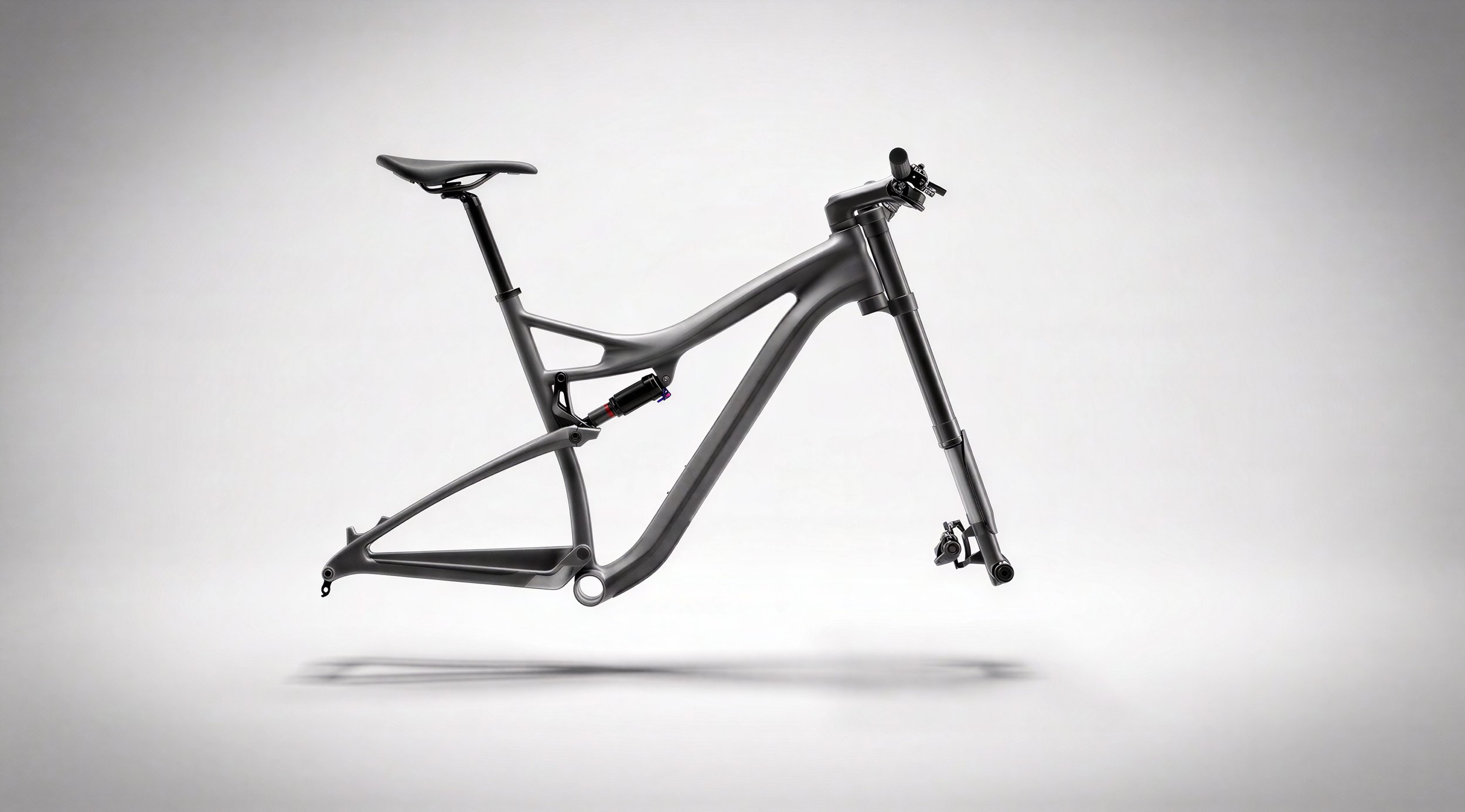
The Scalpel is Cannondale’s ultimate cross-country race mountain bike. Beginning with the original 2003 model—featuring the distinctive “Frog Link” and flexing zero-pivot chainstays—it continued to evolve into an increasingly sophisticated race machine.
With the introduction of the 29-inch wheel platform, we needed to bring its performance advantages to the Scalpel while preserving the bike’s lightweight, competition-focused character. The integrated suspension link and split top tube created a natural progression from the larger Jekyll, but the two bikes required distinctly different personalities.
Where the Jekyll used sharper, more aggressive lines, the Scalpel adopted smoother, more organic forms to communicate speed, efficiency, and lightness. The result was a cohesive and refined design in which every detail had a functional purpose and nothing was added without reason.
Contro
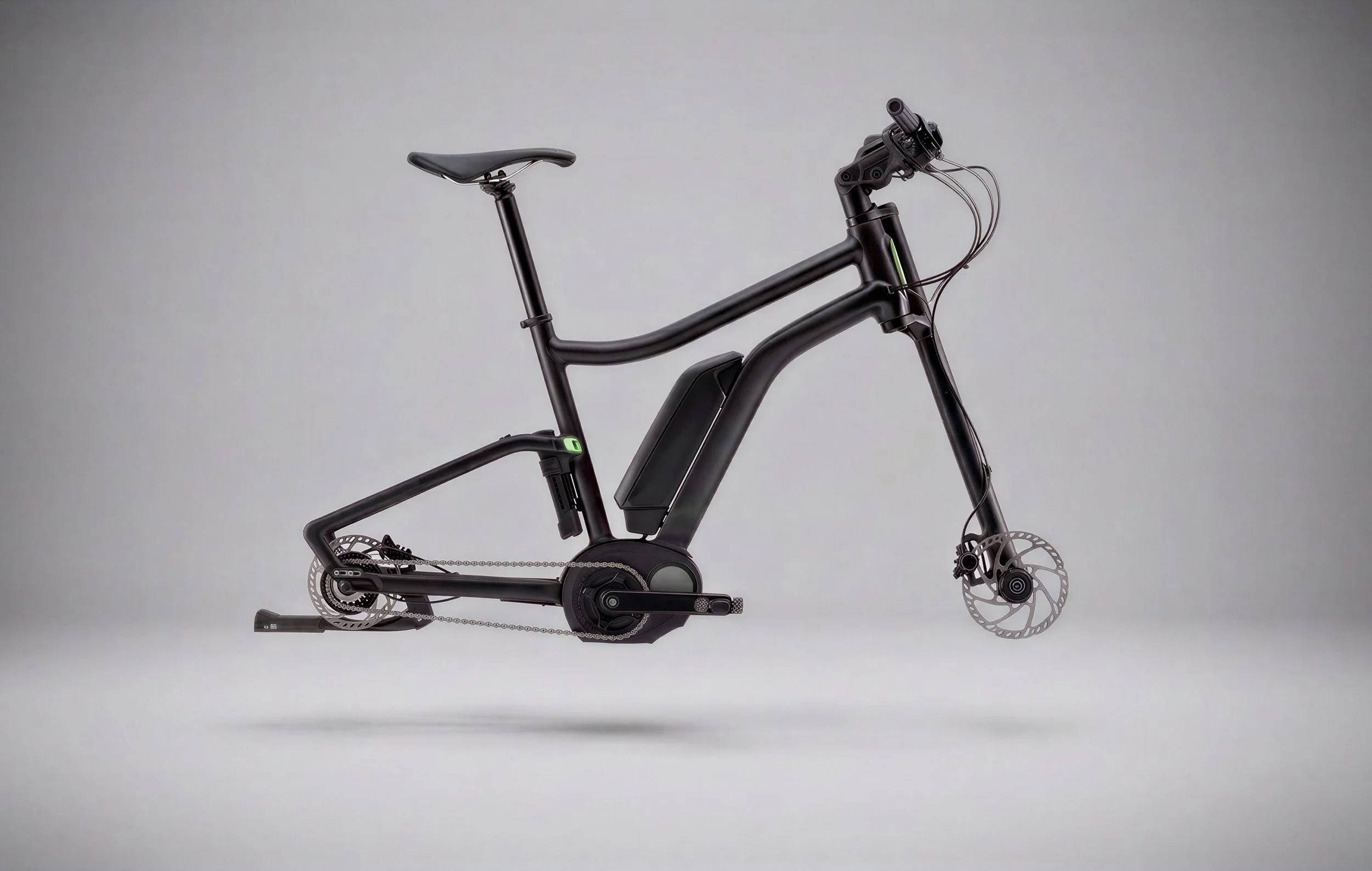
The Contro began as an exploration of how Cannondale’s iconic Bad Boy could evolve into a new generation of urban bicycle. Originally derived from a hardtail mountain bike, the Bad Boy combined race-bike geometry with slick road tires, giving cross-country riders a faster training option for the off-season and helping establish a new category of performance city bikes.
For the Contro, I returned to the core idea of a “mountain bike for the city” and reinterpreted it through a more distinctive urban design. Its silhouette was inspired by a full-suspension mountain bike, with the top tube flowing directly into the low-slung seatstays. This created a recognizable profile that stood apart from bicycles with conventional front-triangle construction. The electric version also integrated the Bosch battery cleanly into the downtube.
The project introduced a more efficient color-and-graphics strategy as well. Rather than producing the frame in multiple painted colorways, we used a single frame color with interchangeable molded components to differentiate specifications and add customization. These pieces could be produced in multiple colors and bolted directly to the frame, reducing finish-related SKUs and simplifying inventory.
Trigger 29er
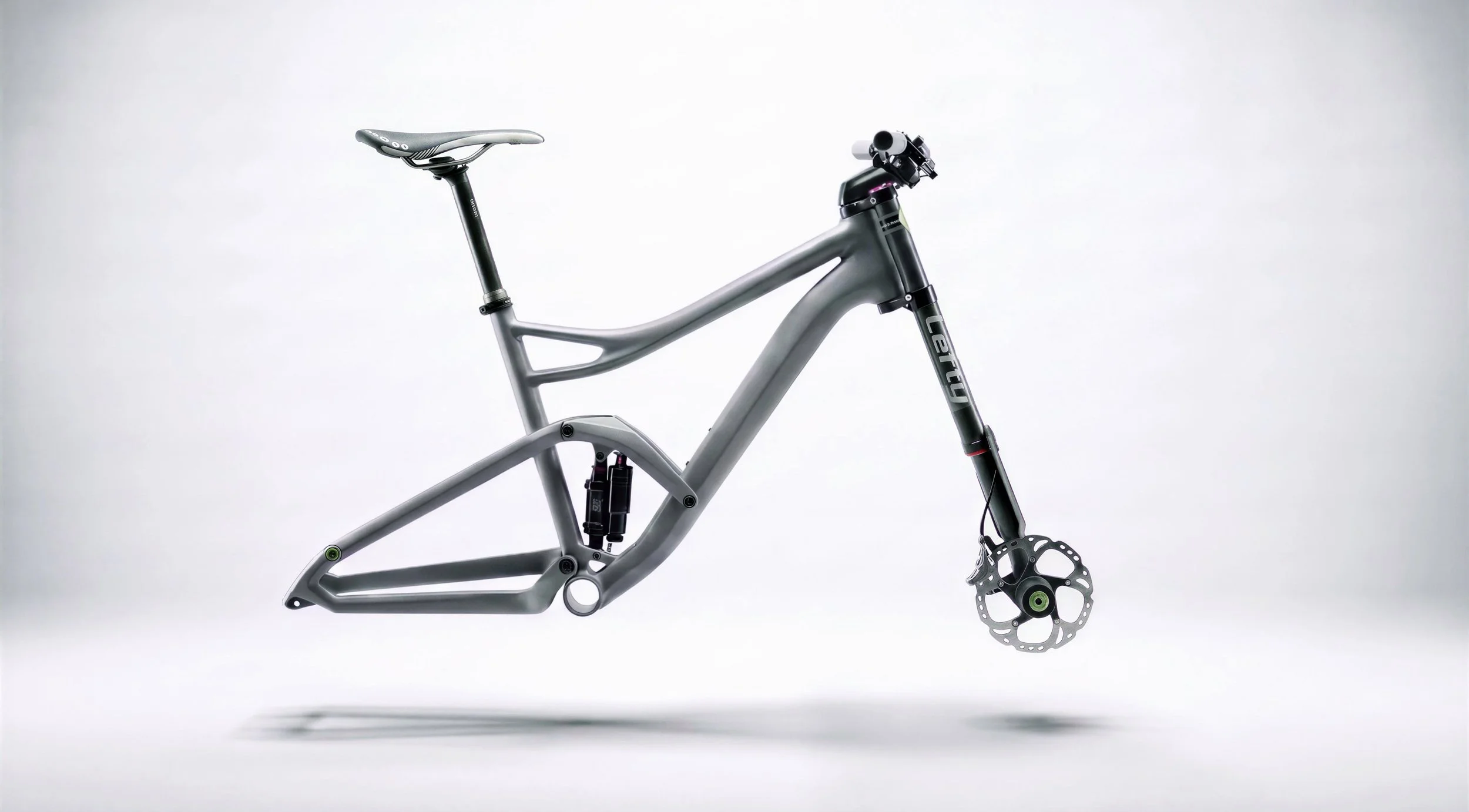
The Contro began as an exploration of how Cannondale’s iconic Bad Boy could evolve into a new generation of urban bicycle. Originally derived from a hardtail mountain bike, the Bad Boy combined race-bike geometry with slick road tires, giving cross-country riders a faster training option for the off-season and helping establish a new category of performance city bikes.
For the Contro, I returned to the core idea of a “mountain bike for the city” and reinterpreted it through a more distinctive urban design. Its silhouette was inspired by a full-suspension mountain bike, with the top tube flowing directly into the low-slung seatstays. This created a recognizable profile that stood apart from bicycles with conventional front-triangle construction. The electric version also integrated the Bosch battery cleanly into the downtube.
The project introduced a more efficient color-and-graphics strategy as well. Rather than producing the frame in multiple painted colorways, we used a single frame color with interchangeable molded components to differentiate specifications and add customization. These pieces could be produced in multiple colors and bolted directly to the frame, reducing finish-related SKUs and simplifying inventory.